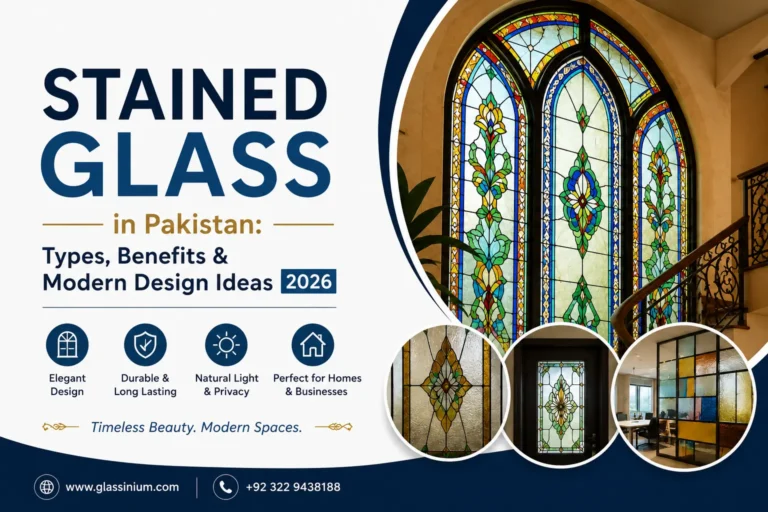
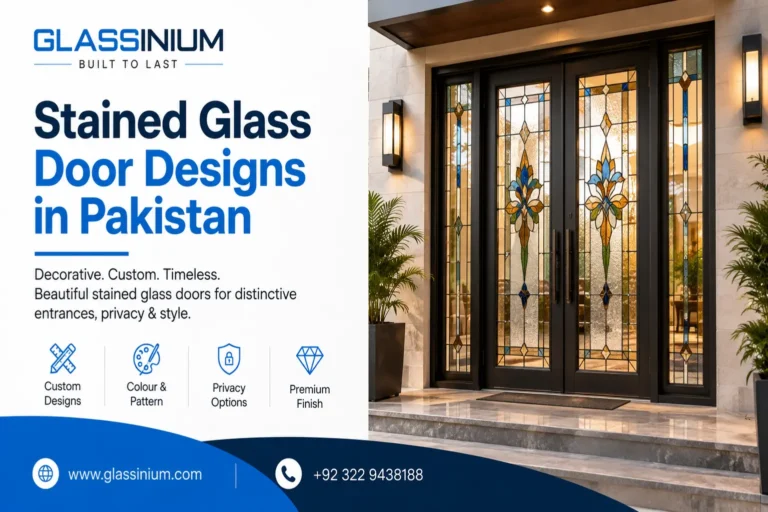
Islamic Stained Glass Designs: Patterns, Ideas & Custom Options
Islamic stained glass designs bring together geometry, symmetry, colour and architectural detail to create distinctive decorative features. From repeating star patterns to elegant arabesque arrangements, these designs can add character to a home’s windows, entrance panels, interior partitions and prayer spaces.
For homeowners and designers in Pakistan, the right Islamic glass design should balance visual beauty with the needs of the room. Some spaces call for a restrained geometric pattern, while others can accommodate a more detailed decorative panel. Glass type, available light, privacy, frame design and the size of the opening all influence the final result.
Glassinium helps customers explore custom glass solutions for residential and commercial projects. This guide explains Islamic stained glass styles, where they can be used, how to choose a suitable pattern and which factors affect the overall project cost.
What Are Islamic Stained Glass Designs?
Islamic stained glass designs are decorative glass arrangements inspired by geometric patterns, arabesque ornamentation, architectural forms and, where appropriate, calligraphy. Their visual character often comes from repetition, proportion and carefully balanced shapes rather than a single large illustration.
Traditional stained glass and modern decorative glass are not necessarily the same product. Depending on the design, a project may use coloured glass pieces, textured glass or another decorative treatment. Printed and tinted products can also create a patterned appearance, but their construction and performance may differ.
Before ordering, ask the supplier to specify the actual glass material, finish and fabrication method. This helps you understand what you are buying rather than judging the product only from a digital design or photograph.
Popular Islamic Stained Glass Designs Style
1. Geometric Star Patterns
Geometric star patterns are among the most recognisable forms of Islamic ornament. Repeating stars, polygons and interlocking lines can produce a balanced design that works across a range of architectural styles.
A simple geometric arrangement can complement a contemporary home, while a denser pattern may suit a more traditional entrance or feature window. The scale of the pattern matters: details should remain clear within the available panel dimensions.
For a modern look, consider a limited colour palette and clean framing. For a more decorative result, a combination of contrasting colours may create a stronger visual feature.
2. Arabesque and Floral Motifs
Arabesque designs use flowing lines, leaves, vines and repeating botanical forms. They can soften the appearance of geometric patterns and introduce movement into a decorative glass panel.
These motifs may work well in sitting rooms, feature windows, selected door panels and interiors with traditional detailing. The pattern can be arranged around a central feature or repeated along the borders of the glass.
When selecting an arabesque design, consider how its curves relate to the surrounding architecture. A well-proportioned pattern should complement the room rather than compete with furniture, wall decoration or other ornamental details.
3. Islamic Arch-Inspired Designs
Architectural arches can provide a useful framework for Islamic-inspired decorative glass. A pointed or curved outline can be incorporated into a larger window composition or used as a central visual element.
This approach may suit entrance areas, prayer rooms and properties with traditional architectural features. The frame and panel should be designed together so the arch does not look disconnected from the rest of the opening.
4. Arabic Calligraphy Glass Panels
Arabic calligraphy can create a meaningful focal point when the chosen text, layout and setting are appropriate. Depending on the project, calligraphy may be combined with geometric borders or presented as a more restrained central feature.
Accuracy is essential. Supply the exact approved text or artwork, verify spelling and diacritical marks where relevant, and review the final design at its intended size before production. Do not rely on an automatically generated image as the final source for sacred text.
Consider readability, contrast and placement as well. Highly intricate backgrounds may make calligraphy difficult to read, especially when the panel is viewed from a distance.
5. Minimalist Islamic Glass Designs
Islamic-inspired decoration does not have to be elaborate. A small repeating motif, a clean geometric border or a symmetrical arrangement can introduce cultural character without dominating a contemporary interior.
Minimal designs are useful when you want the glass to coordinate with simple furniture, neutral walls or modern aluminium frames. They can also be easier to integrate into a room that already contains several visual features.
Where Can Islamic Decorative Glass Be Used?
The best application depends on the dimensions, frame, lighting and intended function of the space.
Home windows: Geometric or arabesque patterns can add detail to a living room, staircase or selected feature window. Consider how much daylight the glass should transmit and whether the room needs additional privacy.
Main doors and side panels: Islamic motifs can create a distinctive entrance when the panel proportions and frame are planned together. Confirm the glass specification and safety requirements for the door’s location.
Prayer rooms: A restrained geometric pattern or carefully reviewed calligraphy panel may help establish a calm, considered setting. Design choices should reflect the room’s purpose and the preferences of the people using it.
Interior partitions: Decorative glass can separate selected areas while preserving some visual connection between spaces. The level of transparency depends on the actual product and pattern.
Mosques and community spaces: Larger projects may require a coordinated design across several windows or panels. Pattern consistency, measurements, installation planning and material suitability should be reviewed before fabrication.
Hospitality and commercial interiors: Hotels, reception areas and selected retail spaces may use Islamic-inspired patterns as architectural accents. The design should complement the brand, interior layout and maintenance requirements.
How to Choose the Right Islamic Stained Glass Designs
Start With the Architecture
Look at the building’s existing shapes, frame colours, doors and windows. Repeating the same visual language can make the new glass feel like a natural part of the property. If the architecture is contemporary, simpler geometry may be a better fit than a highly detailed ornamental arrangement.
Select Colours Carefully
Clear, neutral, blue, green, amber and other coloured glass options can create very different effects. The best choice depends on the surrounding materials and the amount of light entering the space.
Request a sample or a clear product demonstration when colour accuracy is important. The appearance can change according to daylight, indoor lighting and the background behind the glass.
Consider Privacy and Light
A decorative panel may need to provide privacy as well as visual appeal. Ask how visible the space will be through the selected glass from both sides and under different lighting conditions.
Do not assume that every coloured or patterned glass panel offers privacy. If the opening faces a neighbouring property or a public area, confirm the actual opacity and suitability of the product before placing an order.
Plan the Pattern Around the Panel
A design that looks attractive on a large screen may not work at a smaller size. Share accurate measurements and ask for a scaled layout before fabrication. Repeating elements should fit the panel without awkward cuts or cramped details.
For calligraphy and intricate geometry, a full-size or proportionally accurate preview is particularly useful.
Confirm the Glass and Installation Specification
The appropriate glass depends on the opening, its position, frame construction and applicable safety requirements. Ask the supplier to explain the proposed material, edge treatment, support system, hardware and installation scope.
For larger or difficult-to-access openings, professional site assessment can help identify measurement and fitting issues before work begins.
Islamic Stained Glass Price in Pakistan
The Islamic stained glass Price in Pakistan depends on the project’s dimensions, materials, design complexity and installation requirements. There is no single rate that accurately describes every custom panel.
The main factors affecting the quotation include:
- Panel size: Larger panels generally require more material and careful handling.
- Pattern detail: Intricate geometry, multiple colours and custom artwork can require additional design and fabrication work.
- Glass type: Traditional stained glass and alternative decorative products can have different material and production costs.
- Calligraphy or bespoke artwork: Custom artwork may require preparation, review and adjustments before production.
- Frame and hardware: The frame, fittings and supporting components affect the total project cost.
- Installation conditions: Site access, opening preparation and fitting requirements may influence labour and scheduling.
- Project quantity: A single feature panel may have different production requirements from several matching windows.
To request a useful estimate, share the opening dimensions, preferred pattern, location and a reference image. Specify whether you need the glass panel only or a complete solution including framing and installation. Comparing quotations with the same specifications makes it easier to assess value.
Custom Islamic Stained Glass Designs in Lahore
Glassinium works with customers exploring decorative glass solutions for homes and commercial spaces. If you are planning an Islamic-inspired panel in Lahore, begin by identifying its purpose: a feature window, door insert, partition or decorative panel may each require a different approach.
Prepare your measurements and references before requesting a quotation. If you have a particular geometric motif or calligraphy artwork in mind, share the approved design so its proportions and details can be reviewed.
A clear project discussion should cover the glass type, colours, pattern layout, frame requirements, installation scope and final approval process. Confirm what is included in the quotation and have the agreed specifications documented before fabrication begins.
For broader inspiration, explore Glassinium’s stained glass designs in Pakistan and original stained glass guide. These resources cover wider design ideas and can help you compare different decorative approaches before choosing a specific Islamic-inspired style.
Frequently Asked Questions
What are the most popular Islamic stained glass designs?
Geometric stars, symmetrical patterns, arabesque motifs, arch-inspired layouts and selected calligraphy designs are useful starting points. The right choice depends on the space, panel size and preferred level of decoration.
Can Islamic stained glass be used in modern homes?
Yes. Minimal geometric patterns, restrained colours and simple borders can complement modern interiors. The design should be scaled to the window or door and coordinated with its frame.
Is Arabic calligraphy suitable for decorative glass?
It can be, provided the text and artwork are reviewed carefully. Verify the exact wording and layout before fabrication, especially when the panel contains sacred text.
How much does Islamic stained glass cost in Pakistan?
The price depends on dimensions, glass type, pattern complexity, framing and installation. Share your measurements and reference design with Glassinium to discuss a project-specific quotation.
Can Islamic Stained glass designs be customised?
Custom designs can be planned around the opening, colour scheme and preferred geometric or ornamental pattern. Confirm the material and final artwork before production.
Do Islamic stained glass panels provide privacy?
Privacy depends on the glass type, finish, pattern and lighting conditions. Ask to review the actual product from both sides before choosing it for a bedroom, prayer room or other private space.
Can Glassinium discuss Islamic stained glass projects in Lahore?
You can contact Glassinium to discuss your project requirements, location, measurements and preferred design. Providing reference images and clear dimensions can make the quotation process more straightforward.
Request a Custom Islamic Stained Glass Designs
Choose a design that respects the intended setting, complements the architecture and meets the practical needs of the space. Whether you prefer repeating geometric patterns, arabesque detailing or carefully reviewed calligraphy, planning the material and panel proportions is just as important as selecting the artwork.
Share your measurements, reference images and project location with Glassinium to discuss suitable decorative glass options and request a quotation.
Glassinium — Custom Islamic Stained Glass Designs Quotation, Pakistan.